













General
Why does Seasoned Oak split?
What causes shrinkage and splitting?
11th March 2024
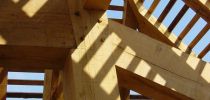
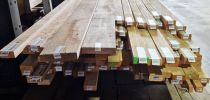
Seasoned oak beams (Vieux Oak) are air dried over an extended period, typically 1–3 years, so that much of the initial shrinkage, splitting and movement takes place before the timber is used. As the oak dries, splitting is a natural and unavoidable part of the process.
What causes the splits?
There are two main causes. First, oak dries from the outside in. The surface loses moisture and shrinks before the core, and because the wetter core resists this shrinkage, the surface cracks. Second, oak shrinks almost twice as much along its growth rings as it does across them. In beams that contain the heart (centre) of the tree, this uneven shrinkage causes splits that open towards the heart. These almost always occur, whatever drying method is used.
Oak’s natural features also play a part. Splits tend to open along the medullary rays, which are natural lines of weakness in the timber, and knots can cause local splitting because of the distorted grain around them.
Are splits a defect?
No. Splits, shakes, bow, twist, woodworm and other natural features may occur as part of the drying process. They are not considered defects unless they affect the structural integrity of the beam, and many people value them as part of the naturally aged, rural character of seasoned oak.
Splits may also open and close slightly over time as the moisture in the beam evens out and as it responds to the seasons.
Will seasoned oak still move?
Seasoned oak is more stable than fresh sawn oak, but it is not completely dry. Large sections dry very slowly, at roughly one year per 25mm of thickness, so the core of a seasoned beam may still be drying when it’s installed. Once in place, the beam will continue to adjust to its surroundings, particularly in heated interiors. Some further movement and splitting should be expected and allowed for.
Where should I use seasoned oak?
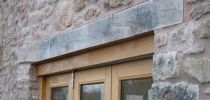
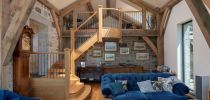
Seasoned beams are ideal where greater stability than fresh sawn oak is needed, or where a naturally aged and rural look is wanted. They are often used for beams, lintels and mantelpieces. Mantelpieces above a working fire or stove are exposed to very dry heat, so expect further checking there. Because of their rustic nature, seasoned beams are not recommended for fine joinery.


